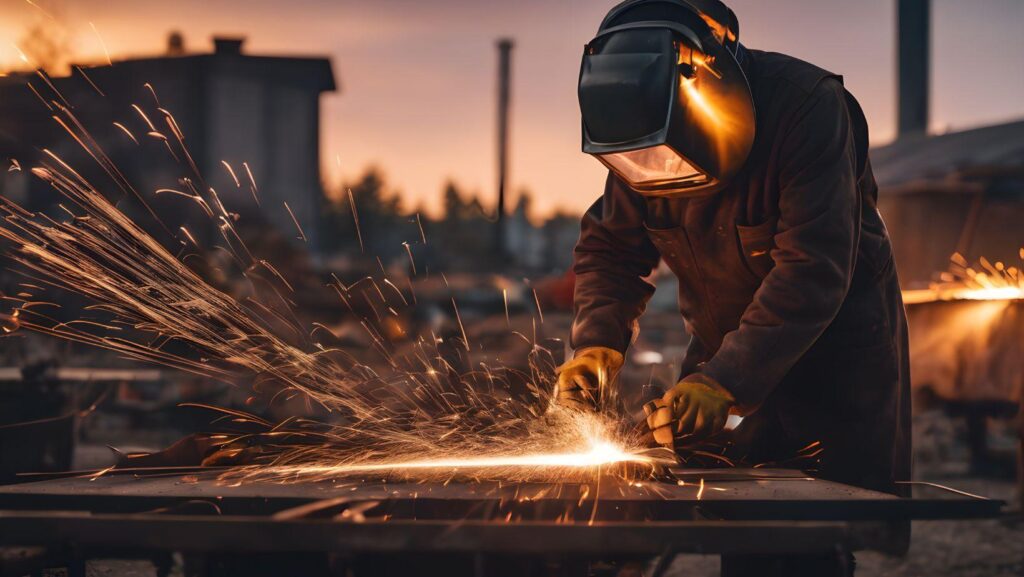
A welder walks into a fabrication shop on a Monday morning. The smell hits before they see the work stations. That acrid, metallic haze hanging near the benches? That’s not just discomfort. That’s a business problem disguised as normal shop atmosphere. Most welding shop owners and managers assume poor air quality is inevitable, something you tolerate because it’s part of the work. They’re wrong. When fume extraction systems underperform, the consequences ripple far beyond a few uncomfortable shifts. Worker productivity drops. Equipment suffers accelerated wear. Compliance becomes a moving target. Yet many shops don’t realize they’re hemorrhaging efficiency until a turnover spike or inspection notice forces the issue.
Key Takeaways
- Poor fume extraction in welding shops creates operational costs that often exceed the price of proper equipment.
- Worker performance, equipment lifespan, and facility maintenance are all directly affected by air quality failures.
- Diagnosing air quality problems requires understanding where fumes originate and how they move through your shop space.
- Portable and industrial-grade extraction systems are available for shops of all sizes and configurations.
- Proactive air quality management protects both workers and your bottom line.
Why It Matters: The Real Price of Invisible Fumes
Welding fumes are not a benign nuisance. They are a cocktail of metal oxides, gases, and fine particulates that degrade air quality and, over time, degrade shop operations. When ventilation fails, workers aren’t just breathing poor air; they’re working in an environment where their focus and energy decline measurably. Studies in industrial settings consistently show that air quality below acceptable thresholds increases fatigue, reduces task accuracy, and raises the likelihood of mistakes. For a welder, a mistake isn’t just a rework expense. It’s a potential safety incident.
The business impact extends beyond worker performance. Equipment in a high-fume environment accumulates deposits faster. Overhead systems, electrical components, and even walls collect metallic residue that requires more frequent cleaning and maintenance. Facility costs rise. Tool life shortens. And when inspectors arrive, a shop operating in poor air conditions faces documentation headaches and remediation demands that multiply quickly.
When looking for ways to address air quality systematically, the team at Fume Dog focuses on extraction solutions designed for the real constraints of fabrication shops: space limitations, budget reality, and the need for equipment that doesn’t slow down production. Understanding what works in your specific environment is the first step to fixing what most shops treat as unsolvable.
Diagnosing Your Shop’s Fume Problem
Not all air quality failures are obvious. Some shops have scattered ventilation. Others have extraction equipment that is undersized for the work volume they’re running. Diagnosing where the problem lives is essential before investing in a solution.
Where Fumes Concentrate Most
Fumes don’t distribute evenly. They pool near the source and tend to rise, creating hotspots around workbenches and overhead accumulation along roof structures. In a small fab shop with benches along one wall, fumes drift toward that wall. In a larger facility with multiple stations, fumes from different processes can collide and create stagnant pockets. The first diagnostic step is simple observation. Watch where haze settles during a busy shift. Talk to welders about where they feel the heaviest air. The concentration points reveal where your extraction system is failing to capture and move air effectively.
Assessing Equipment Performance
Many shops inherit extraction equipment that was never properly matched to their work. An extractor sized for light hobby work can’t handle a production floor running multiple welding stations simultaneously. The equipment may be running, but it’s not moving enough volume. You’ll see haze still present after extraction starts, or fumes return quickly after a shift ends. Performance degradation also occurs over time. Filters clog. Ductwork develops leaks or blockages. A unit that worked adequately three years ago may now be running at 50 percent efficiency and no one noticed because it happened gradually.
Environmental Triggers
Seasonal changes matter more than many shops realize. Cold, dense air in winter doesn’t rise as readily, so fumes stay lower and accumulate faster. High humidity can affect how effectively certain extraction systems move air. Shop layout changes create new dead zones. A new piece of equipment added to the floor might obstruct airflow from existing extraction points. Diagnosing means asking not just “is my equipment running” but “is my airflow reaching every work area, and has anything changed in my shop recently that might have disrupted the system.”
The Three Categories of Extraction Solution
Once you’ve identified the problem, you need to match it to a solution type. Not every shop needs the same approach.
Portable Extraction Units
For shops with space constraints, flexible work arrangements, or multiple welding stations that don’t stay in one location, portable extractors are pragmatic. They’re positioned near the work, capture fumes at or near the source, and can be moved as jobs shift. They don’t require permanent ductwork installation and don’t disrupt an existing facility layout. For a small fabrication shop running contract work or a job shop with constantly changing bench layouts, portable units reduce capital expense and offer operational flexibility. The trade-off is that they work best for localized capture, not whole-shop air management.
Fixed Ductwork Systems
For shops with permanent workstations and predictable work patterns, fixed ductwork systems tied to centralized extractors offer superior performance and efficiency. Air is pulled from multiple stations into a single, powerful unit. The system runs continuously or on a schedule that matches production hours. These systems require installation investment but deliver better air quality across the whole facility and lower long-term operating costs because efficiency improves with scale. A large fabrication shop with five welding stations benefits dramatically from a properly designed fixed system.
Hybrid Approaches
Many facilities run both. A central system handles the bulk air quality management for permanent stations, while portable units supplement capture in areas where fumes still escape or in temporary work zones. This dual approach maximizes coverage without overengineering the solution.
A Real Shop Scenario: How One Fab Shop Identified and Solved the Problem
Consider a mid-size fabrication shop running three welding stations, two plasma cutting stations, and a grinding area. Over six months, they noticed worker complaints about air quality during afternoon shifts. Turnover increased slightly. Equipment maintenance costs ticked up. The facility manager assumed they needed a bigger extraction system and was bracing for a capital expense.
Before spending, they conducted a simple diagnostic. They tracked air movement patterns during peak production. What they discovered: the central extraction unit was actually sized correctly, but three factors were reducing performance. First, one section of ductwork had a partial blockage from accumulated dust. Second, a new equipment rack installed six months earlier was obstructing return airflow. Third, they were running extraction equipment only during shifts, but fumes lingered and reaccumulated between shifts, creating a stale air baseline that made afternoon shifts feel worse.
Their solution cost far less than new equipment. They cleaned the ductwork, repositioned the obstruction, and adjusted their extraction schedule to run for 30 minutes after production ended each day. Air quality improved noticeably. Worker feedback shifted within two weeks. They avoided a six-figure capital purchase by diagnosing correctly first.
This scenario illustrates a broader truth: many air quality problems are not equipment failures. They’re system failures. The equipment exists but isn’t being used optimally. Diagnosis before investment saves money and delivers faster results.
Actionable Takeaways
- Map your current fume hotspots. Spend one shift observing where haze concentrates. Ask workers where they feel poor air quality most acutely. Document these observations.
- Inspect your existing extraction equipment. Check filters for clogging, ductwork for blockages, and connections for leaks. If equipment hasn’t been serviced in over a year, schedule maintenance.
- Test airflow with a simple observation. Light a smoke pencil near your extraction intakes during operation. Watch how air moves. Dead spots are visible immediately.
- Calculate your production volume and work area. Determine how many cubic feet of air your extraction system needs to move per minute given your work stations and processes. Compare this to your equipment’s rated capacity.
- Identify whether you need portable, fixed, or hybrid extraction. Consider your shop layout, work patterns, and budget. A temporary solution might be portable units while you plan a permanent system upgrade.
- Establish a maintenance schedule. Monthly filter checks, quarterly ductwork inspection, and annual full system performance review prevent degradation.
Conclusion
Welding shop air quality is not a regulatory checkbox or a comfort issue. It’s an operational asset that affects worker output, equipment longevity, and facility costs. Shops that treat air quality as a system problem, not just an equipment problem, consistently outperform those that do not. The haze in your shop this morning is not inevitable. It’s a signal. The question is whether you’ll diagnose it or accept it as the cost of doing business.
FAQ
What’s the difference between fume extraction and general shop ventilation?
Fume extraction captures fumes directly at or near the source, filtering them and removing them from the shop air. General shop ventilation moves air around but doesn’t necessarily capture or filter fumes. Extraction is active and targeted; ventilation is passive. For welding operations, extraction is far more effective because fumes are concentrated and toxic, requiring capture rather than dilution.
How often should welding fume extraction equipment be serviced?
Filters should be checked monthly for clogging and replaced based on the manufacturer’s schedule, typically every two to six months depending on work volume. Ductwork and connections should be inspected quarterly for blockages or leaks. The main extraction unit should receive a full performance check annually. Regular maintenance prevents efficiency loss and extends equipment life.
Can I use a shop vacuum for welding fume extraction?
No. Standard shop vacuums are not designed to handle welding fumes. They lack the filtration necessary to capture fine metal oxide particles, and they can create fire hazards if fumes come into contact with the motor. Welding fume extraction requires equipment specifically designed for the thermal and chemical properties of welding smoke.
What size extraction system do I need for my shop?
System size depends on your cubic footage, number of welding stations, welding processes (MIG, TIG, stick, etc.), and desired air changes per hour. A general rule is that you need enough capacity to change the air in your shop four to eight times per hour. Your equipment supplier can calculate the exact requirement based on your facility and production volume.
Is portable fume extraction effective for production work?
Portable extraction units are effective for capturing fumes near the source, especially in small shops or for flexible work arrangements. They work best when positioned close to the welding station. For high-volume production or large facilities, a fixed system with ductwork typically delivers superior coverage and efficiency. Many shops use portable units to supplement a main system or in areas where fixed extraction isn’t practical.
How do I know if my current extraction system is working?
Observe the air during welding. Haze should dissipate quickly, not linger or drift across the shop. Ask workers if they notice fume odor or haze at their stations. Check your filters; rapid clogging suggests the system is capturing fumes but may be undersized. If haze persists, ductwork is blocked, or air quality complaints have increased, your system likely needs service, maintenance, or upgrade.